Introduction: Unlocking Uttarakhand’s Potential
Uttarakhand is a state brimming with untapped talent, especially in its rural and semi-urban areas. Despite the region’s natural beauty and industrious people, many individuals face challenges such as limited career opportunities, unemployment, and lack of practical skills.
SAMAST, an NSDC-affiliated institute, is tackling these challenges head-on. By providing affordable, skill-based training, SAMAST is empowering Uttarakhand’s youth and workforce to achieve their potential, creating pathways for economic growth and self-reliance.
The Need for Skill Development in Uttarakhand
High Rural Unemployment:
- A lack of industries and job-ready skills contributes to unemployment in rural areas.
Migration to Urban Centers:
- Many talented individuals leave the state in search of work, leading to a brain drain in Uttarakhand.
The Gap Between Education and Employment:
- Traditional education often fails to provide the practical expertise needed in today’s job market.
Entrepreneurial Potential:
- Many individuals have the drive to start their own businesses but lack the technical and entrepreneurial skills to do so.
SAMAST bridges these gaps by offering job-oriented vocational training, equipping Uttarakhand’s talent to thrive in local industries and global markets.
SAMAST’s Approach to Unlocking Potential
1. Affordable and Inclusive Training
- SAMAST’s programs are cost-effective, ensuring that even individuals from economically weaker sections can access quality education.
2. Hands-On Practical Learning
- Courses emphasize real-world applications, preparing students for the challenges of modern workplaces.
3. NSDC-Certified Programs
- These certifications enhance employability by providing credentials that are recognized both nationally and internationally.
4. Placement Assistance and Career Support
- SAMAST helps students secure relevant jobs and guides them in building sustainable careers.
5. Entrepreneurship Focus
- Many programs are designed to help students start their own businesses, encouraging self-reliance and fostering local economic growth.
Key Training Programs Offered by SAMAST
1. Tailoring and Stitching
- Skills Taught:
- Stitching, embroidery, garment design, and finishing techniques.
- Career Opportunities:
- Tailor, Boutique Assistant, Textile Worker.
- Impact:
- Empowers individuals, especially women, to launch home-based tailoring businesses or work in local garment industries.
2. Food & Beverage (F&B) Service Training
- Skills Taught:
- Customer service, table setup, hygiene management.
- Career Opportunities:
- Waiter, Café Assistant, Banquet Staff.
- Impact:
- Prepares youth for Uttarakhand’s growing hospitality and tourism sector.
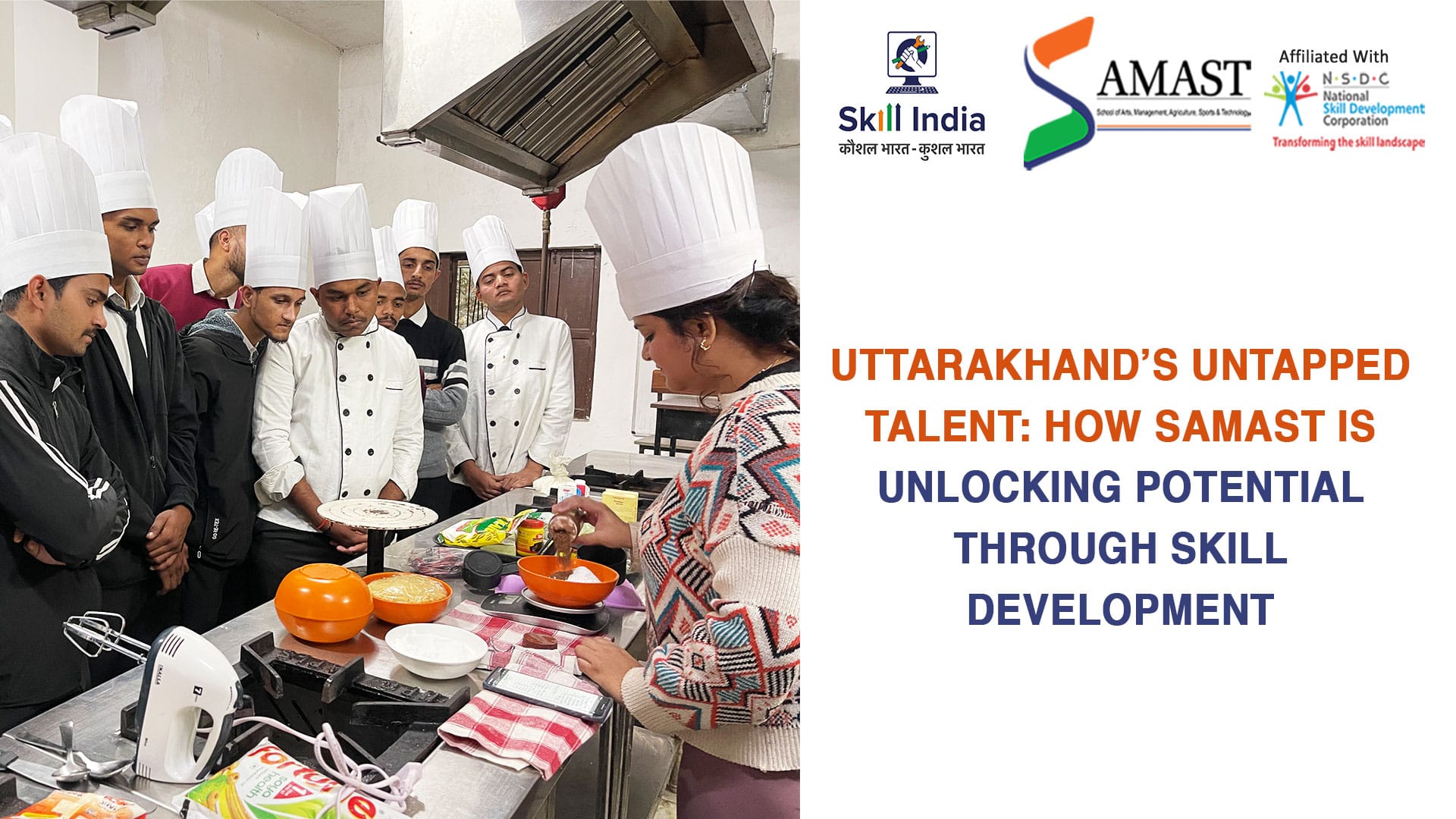
3. Commis Chef Training
- Skills Taught:
- Basic cooking techniques, food handling, kitchen safety.
- Career Opportunities:
- Junior Chef, Bakery Helper, Catering Staff.
- Impact:
- Equips students with culinary skills for jobs in restaurants, hotels, and catering services.
4. Office Support and Data Entry
- Skills Taught:
- Typing, filing, data organization, and billing.
- Career Opportunities:
- Office Assistant, Data Entry Operator, Clerk.
- Impact:
- Provides opportunities for stable administrative roles in businesses and government offices.
The Impact of SAMAST’s Training Programs
1. Empowering Rural Communities
SAMAST focuses on reaching remote and underserved areas, ensuring even those in isolated regions have access to quality training.
2. Reducing Migration
By creating local job opportunities, SAMAST helps reduce the need for individuals to migrate to urban centers for employment.
3. Promoting Self-Employment
Programs like tailoring and stitching empower individuals to start their own businesses, fostering local entrepreneurship.
4. Supporting Local Industries
By providing a skilled workforce, SAMAST strengthens key sectors such as hospitality, tourism, and retail in Uttarakhand.
Success Stories: Real Lives Transformed
Meena – Entrepreneurial Excellence in Tailoring
- Challenge: Limited income opportunities in her village.
- Program Completed: Tailoring and Stitching.
- Outcome: Meena now owns a home-based tailoring business, serving her community and earning a steady income.
- Quote: “SAMAST gave me the skills and confidence to become financially independent.”
Ravi – From Kitchen Helper to Chef
- Challenge: Lack of job-ready skills.
- Program Completed: Commis Chef Training.
- Outcome: Ravi works as a junior chef in a prominent Dehradun hotel, supporting his family.
- Quote: “The hands-on training at SAMAST prepared me for the demands of a professional kitchen.”
Priya – Hospitality Leader
- Challenge: Financial barriers to higher education.
- Program Completed: F&B Service Training.
- Outcome: Priya advanced from a café assistant to team leader, managing daily operations.
- Quote: “SAMAST showed me that with the right skills, I could achieve my dreams.”
FAQs About SAMAST’s Vocational Training Programs
Q1: Who can join SAMAST’s training programs?
A: Anyone above 18 years who wants to gain practical, job-ready skills can enroll.
Q2: Are SAMAST’s courses affordable?
A: Yes, SAMAST offers low-cost programs, ensuring accessibility for all.
Q3: How long do the courses last?
A: Most programs are 3–6 months, providing quick, skill-based education.
Q4: Are NSDC certifications recognized internationally?
A: Yes, NSDC certifications are nationally and globally recognized, enhancing employability.
Q5: Does SAMAST provide job placement support?
A: Absolutely! SAMAST helps with resume preparation, interview coaching, and job placements.
Conclusion: Unlocking Uttarakhand’s Talent, One Skill at a Time
By focusing on practical training, affordable programs, and career support, SAMAST is transforming Uttarakhand’s untapped talent into a skilled and empowered workforce. With a commitment to creating local opportunities and fostering self-reliance, SAMAST is not just unlocking potential—it’s building a brighter future for the region.
Ready to unlock your potential? Join SAMAST today and take the first step toward a successful and fulfilling career!
Share via: